What Are Brand Standards for Video? And Why They Matter More Than Ever
As video becomes the dominant format for business communication, many organizations are running into a familiar problem:
They’re producing more video than ever—but it doesn’t all look or feel like it came from the same brand.
Different teams use different tools. Executives record on different devices. Videos show up across LinkedIn, websites, internal portals, and sales emails—often with wildly inconsistent styling.
This is where brand standards for video come in.
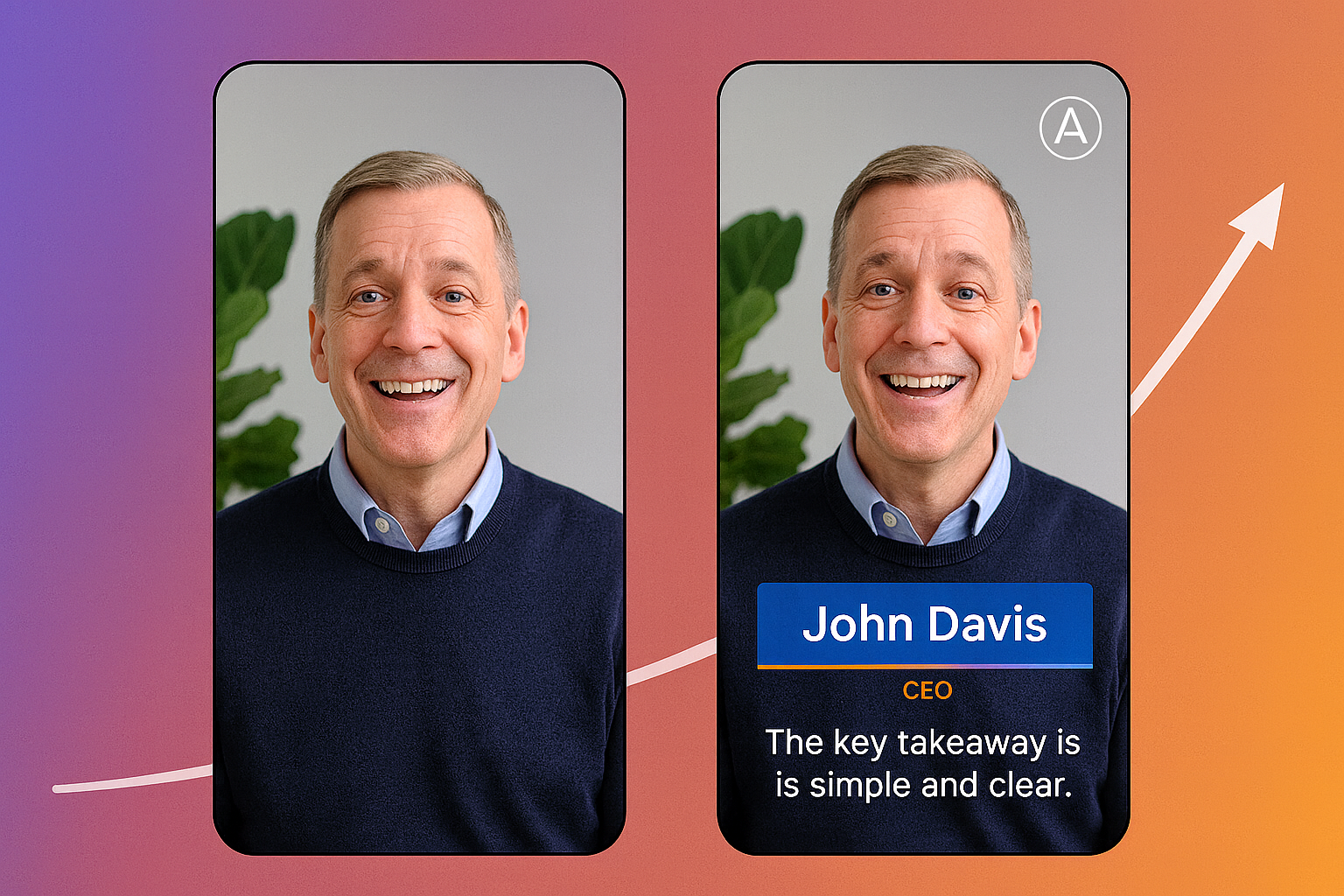
What Are Brand Standards for Video?
Brand standards for video are the rules, templates, and visual guidelines that ensure every video an organization produces looks, feels, and sounds like it belongs to the same brand—no matter who recorded it or where it’s published.
They are the video equivalent of:
- A PowerPoint template
- A brand style guide
- A logo usage document
But instead of governing slides or documents, they govern motion, layout, tone, and presentation in video.
When applied correctly, video brand standards allow anyone in the organization to create professional, on-brand video—without needing editing skills.
Why Video Brand Standards Matter
1. Video Is Now Everywhere
Video is no longer confined to marketing campaigns.
It shows up in:
- Executive thought leadership
- Sales outreach
- Customer testimonials
- Product demos
- Internal communications
- Training and onboarding
- Recruiting and culture content
Without standards, inconsistency scales fast.
2. Inconsistent Video Erodes Trust
When videos look different every time:
- Brands feel fragmented
- Messages lose authority
- Content feels improvised instead of intentional
Consistency signals professionalism and credibility.
3. Video Is No Longer Owned by One Team
Marketing isn’t the only team creating video anymore.
Sales, HR, product, leadership, and customer success all need to contribute. Brand standards make this possible without slowing teams down.
What Do Video Brand Standards Include?
Strong video brand standards define both visual and experiential elements.
1. Visual Identity
These elements ensure brand recognition at a glance:
- Logo placement and safe zones
- Color usage and backgrounds
- Fonts and typography
- Lower-thirds and name titles
- Intro/outro animations
- Caption styles
- Aspect ratio rules (4:5, 9:16, 16:9, 1:1)
2. Motion & Layout
Video is dynamic—standards must account for movement:
- Animation styles (subtle vs energetic)
- Transitions
- B-roll usage
- Framing and spacing
- Visual hierarchy
3. Audio & Tone
Brand standards go beyond visuals:
- Music styles (or no music)
- Volume normalization
- Caption tone and pacing
- Language style (formal vs conversational)
4. Platform-Specific Rules
The same video behaves differently across platforms.
Standards define:
- How LinkedIn videos differ from TikTok
- How vertical differs from horizontal
- How internal videos differ from external ones
Brand Standards vs. Brand Guidelines: What’s the Difference?
Traditional brand guidelines are static. Video brand standards are operational.
| Brand Guidelines | Video Brand Standards |
|---|---|
| PDFs | Templates + automation |
| Design-led | Workflow-led |
| Enforced manually | Applied automatically |
| Limited to marketing | Used across the org |
Video standards must live inside the creation process—not in a document no one opens.
The Biggest Mistake Companies Make
The most common mistake is assuming:
“Our brand standards apply to video already.”
In reality, most brand guides don’t account for:
- Aspect ratios
- Motion
- Captions
- B-roll
- Platform-native formats
- Background Music
- Social Safe-Zones
- Non-designers creating content
Video requires its own layer of standards.
How Modern Teams Apply Video Brand Standards
The best-performing organizations treat video brand standards the same way they treat slide templates.
They:
- Create reusable video templates
- Lock in visual rules
- Automate application
- Allow anyone to record
- Ensure outputs are always on-brand
This shifts video from a special project to a repeatable system.
Why Brand Standards Unlock Video at Scale
When video brand standards are in place:
- Executives feel confident recording
- Sales teams can use video daily
- Marketing regains control without bottlenecks
- Content production speeds up dramatically
- Quality improves as volume increases
Most importantly, brand integrity is preserved as video adoption grows.
Video Brand Standards Are Becoming Table Stakes
As short-form video becomes the default communication format, companies that don’t enforce standards will struggle to maintain clarity and consistency.
Brand standards for video are no longer a “nice to have.” They are becoming a foundational requirement for modern organizations.
Final Thoughts
Brand standards for video ensure that every video—no matter who creates it—reinforces the same brand story.
They make video:
- Scalable
- Trustworthy
- Professional
- Efficient
- Accessible across teams
And as video continues to replace text, slides, and static content, brand standards will be the difference between chaos and clarity.
Read more

How to Use Video Effectively at a Trade Show (Without Breaking Your Brand)
A practical guide to using video before, during, and after a trade show—while maintaining brand consistency across every touchpoint.

Empowering Global Teams: How Videospan Ensures Brand-Compliant Video at Scale
How Videospan helps distributed teams create consistent, brand-aligned video content—anywhere in the world.
What Are Brand Standards for Video? And Why They Matter More Than Ever
A practical guide to understanding video brand standards—what they are, why they matter, and how organizations can apply them consistently at scale.