Unlocking Video Thought Leadership Success in 2026
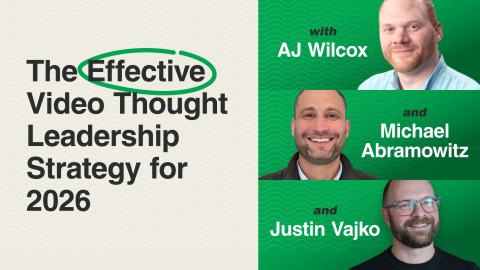
Video thought leadership isn’t new—but in 2026, it's becoming the defining B2B communication format. In a recent live session, Justin Vajko, AJ Wilcox, and Videospan CEO Michael Abramowitz explored why video now sits at the center of trust-building, distribution, and influence online. Their conversation reveals a blueprint for companies looking to elevate their thought leadership programs in a noisy, AI-driven content landscape.
This article summarizes key insights shared in the session (full recording at the bottom):
Why Thought Leadership Is Having a Moment
Thought leadership has surged in importance. As the panel noted, B2B buyers rank thought leadership as a top-three influencer in purchasing decisions—up from number 20 just a few years ago.
Why the jump?
Because the internet is saturated. AI has made it frictionless for anyone to produce text at scale. The result: An authenticity gap.
People aren’t just looking for information—they’re looking for signal, credibility, and a real human point of view.
As Justin said during the session, "We're not in the age of AI—we're in the age of the thought leader."
Decision-makers increasingly want to hear from experts who show up regularly, speak with conviction, and articulate what they actually believe.
The Problem: Most Thought Leadership Isn’t Good
A staggering statistic discussed in the webinar:
- 96% of B2B marketers publish thought leadership
- Only 15% of buyers rate it as very good
That means 85% of what’s produced doesn’t land.
The gap isn’t effort. It’s execution.
Organizations are publishing—but not necessarily creating content that resonates, differentiates, or humanizes their people.
The question becomes: How do you close that gap?
Why Video Is Now the Gold Standard
The panel unanimously agreed: Video is the most effective and trustworthy medium for modern thought leadership.
1. Video builds trust faster than text
AJ Wilcox shared that switching from text-based content to video tripled the impact of his LinkedIn ads and organic content. Video signals presence, tone, confidence, and credibility—things text can't fully transmit.
Video communicates who you are, not just what you think.
2. Buyers now prefer to consume information through short-form video
From Reels to TikTok, younger buyers—and increasingly all buyers—are conditioned to learn through short, authoritative clips. As Michael Abramowitz put it:
“There's just no better way to communicate. The format people consume in their downtime is now the format they expect in business.”
3. AI has lowered the bar for text, but not for authentic human presence
AI can write. AI can summarize. AI can repurpose.
But AI cannot replace:
- your face
- your voice
- your perspective
- your emotional intelligence
When everyone can publish written content instantly, showing up on video becomes a differentiator.
4. Video enables multi-layer storytelling
Great thought leadership isn't just talking—it's:
- A-roll: the speaker
- B-roll: visuals that reinforce the message
- On-screen graphics
- Brand styling
- Emotional cues
- Energy
Video gives teams the ability to deliver deeper, stickier narratives than text ever could.
Rethinking Who Owns Thought Leadership Inside a Company
One of the most valuable takeaways from the session: Thought leadership shouldn’t be limited to the CEO.
Your organization likely has:
- Product leaders
- Sales leaders
- Customer success experts
- Industry analysts
- Technical specialists
These people are your expertise engine.
Video democratizes the ability for anyone—from executives to rising experts—to contribute meaningfully.
When multiple authoritative voices show up consistently, your company becomes a multi-threaded authority, not a single-voice brand.
Video Thought Leadership as a Sales Tool
Thought leadership isn’t just a top-of-funnel activity—it directly drives pipeline.
AJ noted that people were much more willing to book time when they had already watched his videos. It shortened the trust curve:
- Prospects feel like they already know you
- You show competence openly and transparently
- You reduce the perceived risk of taking a meeting
“In order for someone to give you 30 minutes, they have to already know, like, and trust you,” AJ said. Video accelerates that journey.
Whether used organically or as paid retargeting, video establishes familiarity before the first conversation.
The Rise of AI Makes Human Voices Even More Valuable
When AI can mimic writing styles, summarize research, or automate content operations, the human layer becomes the strategic differentiator.
Michael emphasized this point: As AI lowers the cost of creating content, the value of showing up rises. The companies that win will be those who:
- Put real people in front of the camera
- Speak from lived expertise
- Maintain a consistent, recognizable brand standard across every video
- Scale video creation so it’s effortless for contributors
This is precisely where platforms like Videospan come in.
So How Do You Actually Win With Video Thought Leadership?
The panel outlined several key principles:
1. Consistency beats perfection
You don’t need cinematic production. You need regularity.
Thought leadership compounds—like interest.
2. Define clear expertise zones
Each contributor should own a theme:
- “I talk about demand gen.”
- “I talk about compliance.”
- “I talk about operational efficiency.”
This builds a distributed network of recognizable leaders.
3. Embrace short, digestible formats
Instead of waiting for the big monthly video, publish:
- 30–60 second clips
- Micro-insights
- Quick reactions
- Commentary on trends
Short-form is the new long-form.
4. Brand the content automatically
To create credibility and consistency at scale, companies need:
- branded templates
- branded lower thirds
- consistent aspect ratios
- unified color palettes
- standardized fonts
- automatic compliance layers
This is the backbone of Videospan’s platform—bringing video brand standards to everyone in the organization, not just the design team.
5. Measure real impact
Views aren’t enough. Track:
- inbound messages
- demo requests
- comments from ideal buyers
- watch time
- conversions from thought leadership journeys
The real question is: Does your content influence pipeline, hiring, retention, or brand perception?
Final Thoughts: Video Thought Leadership in 2026
The rise of AI hasn’t reduced the need for human experts—it has amplified it.
Organizations that empower their people to show up on camera will stand out as more:
- trustworthy
- transparent
- memorable
- authoritative
Video isn’t just another channel. It’s becoming the primary way people build relationships at scale.
The companies that embrace this shift will lead their markets. The ones that resist will get drowned out in a sea of undifferentiated text.
Full Recording
Want to see how Videospan helps companies operationalize video thought leadership at scale? We’d love to show you.
Read more
Unlocking Video Thought Leadership Success in 2026
Key insights from industry leaders on why video has become the gold standard for modern thought leadership—and how organizations can adopt it at scale.

How To Run a Winning LinkedIn Video Thought Leadership Strategy
Learn the exact strategy top creators and executives use to build influence, authority, and demand using LinkedIn video thought leadership.

How Executives Posting Branded Content to Their Personal LinkedIn Pages Can Massively Scale Organic Reach
Discover why executive-led posting is one of the most powerful and untapped organic growth strategies on LinkedIn, and how companies can operationalize it at scale.