How to Convey Brand Meaning in a 30-Second Video
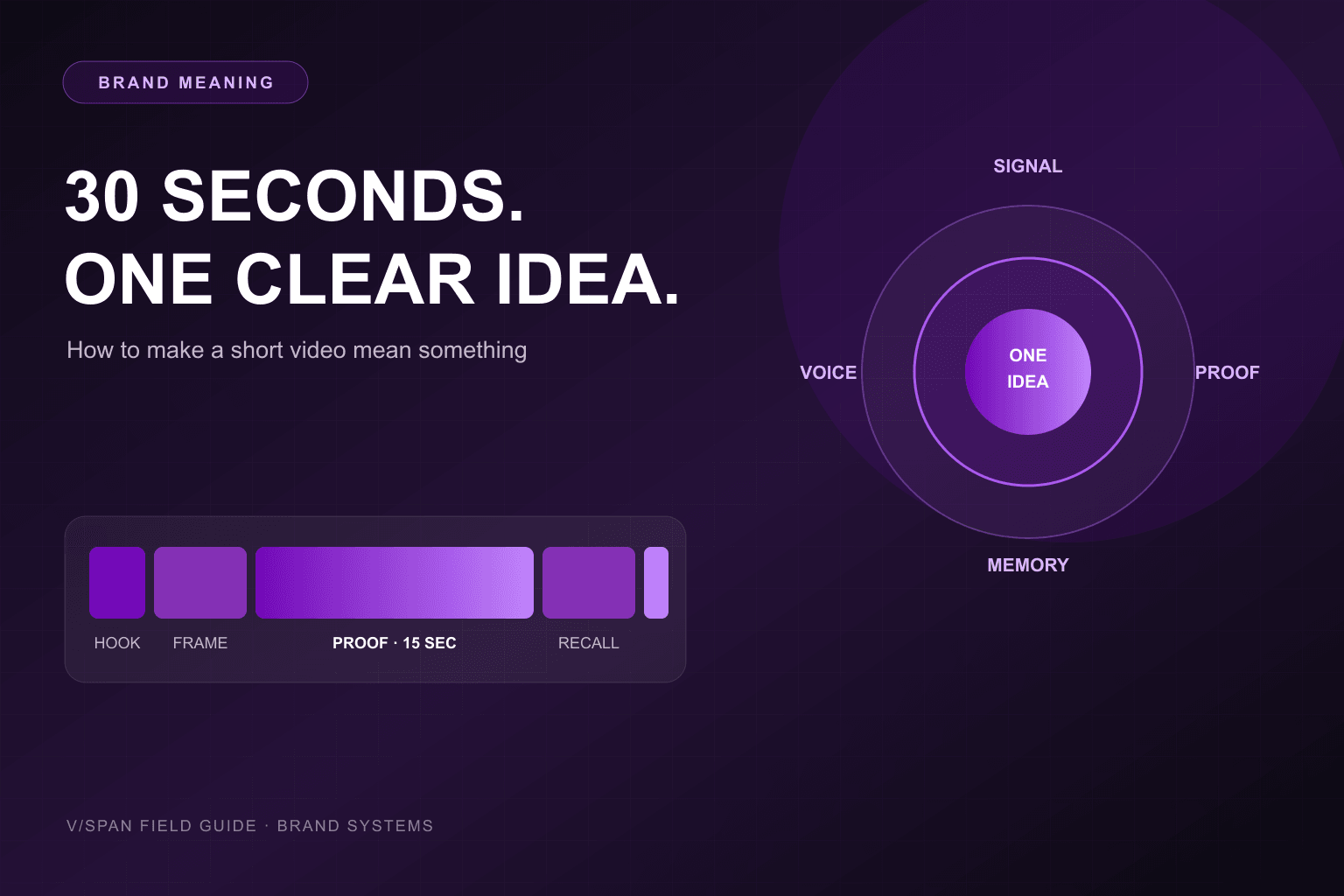
A 30-second video cannot explain everything your brand does.
It can make people understand what your brand means.
That distinction changes the creative brief. Instead of asking how much information you can fit into half a minute, ask a better question:
What should someone believe about us after watching—and what will make that belief stick?
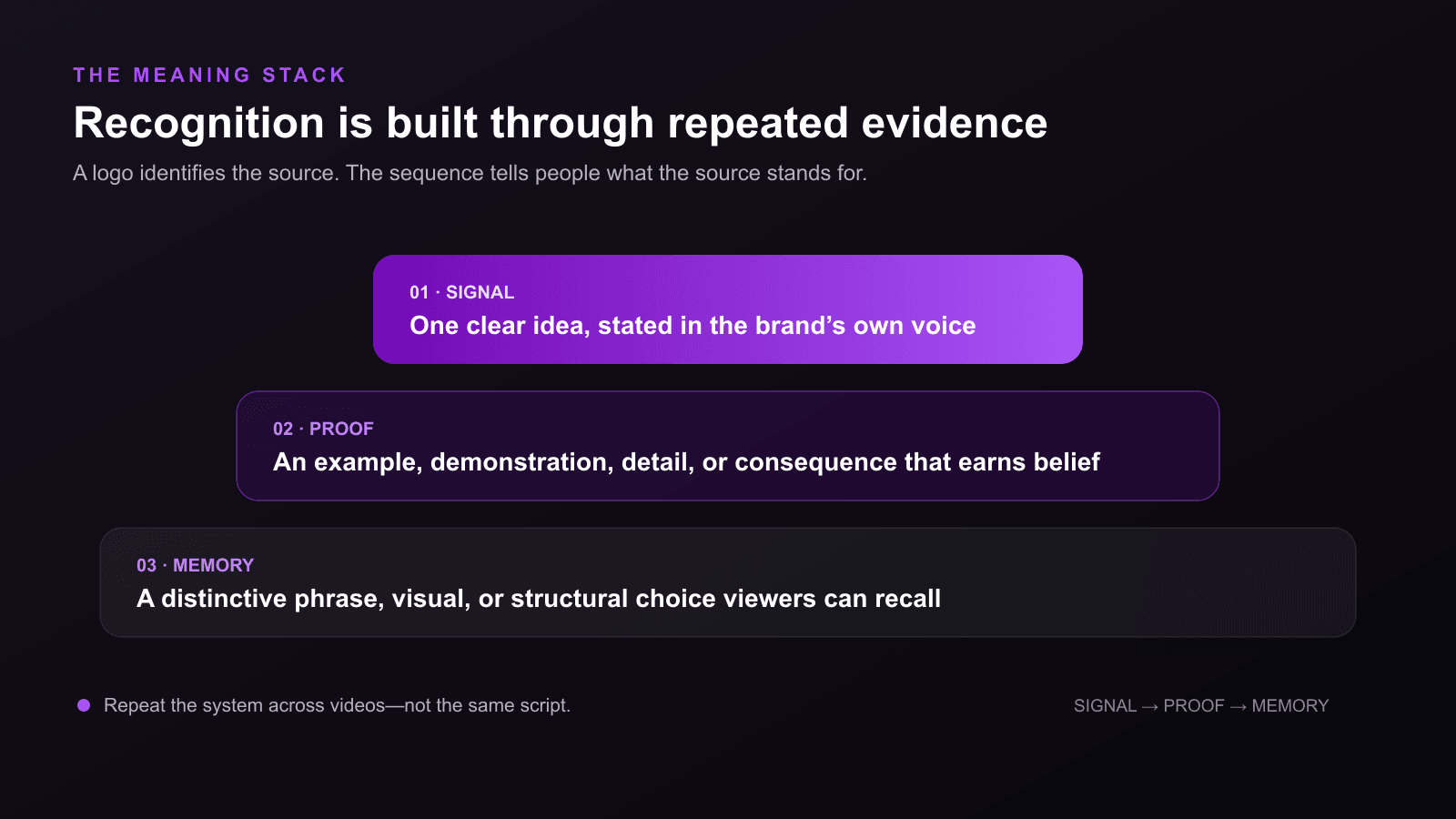
The answer is not a logo, a list of adjectives, or a faster montage. It is one clear idea, expressed through words, images, sound, structure, and proof.
Brand meaning is not brand messaging
Messaging is what you say.
Meaning is what the audience infers from the complete experience.
A company can say “we are innovative” while using a generic template, a vague voiceover, and stock footage of people pointing at screens. The viewer may infer the opposite.
Another company can show one unfamiliar problem being solved in a surprisingly simple way. Without using the word “innovative,” it gives the viewer evidence of innovation.
That is the principle:
Do not spend 30 seconds claiming the attribute. Spend 30 seconds demonstrating it.
Start with one sentence of meaning
Before writing the script, complete this sentence:
After watching, the viewer should believe that we are the brand that __.
Useful answers are specific enough to guide creative choices:
- “…makes global consistency possible without erasing local voices.”
- “…explains complex infrastructure without making people feel uninformed.”
- “…challenges the safe assumption when it stops serving the customer.”
- “…makes a controlled, repeatable process feel calm rather than bureaucratic.”
Weak answers simply list category benefits: “high quality,” “customer focused,” “innovative,” or “end to end.” Those claims may be true, but they do not yet tell a director, editor, or designer what to do.
Once you have the sentence, choose one piece of evidence that makes it believable.
30-second meaning planner
Change the idea, not just the adjective
Meaning to leave behind
Real expertise should feel accessible.
Evidence that makes it believable
A specialist answers one customer question in plain language.
Prove: Show one credible example
Eye-level camera, natural light, one restrained caption style.
The 30-second meaning framework
Use five beats. The timings are a starting point, not a law.
| Time | Beat | Job |
|---|---|---|
| 0–3 seconds | Recognize | Name a tension the right viewer recognizes |
| 3–8 seconds | Frame | State the one idea in your own voice |
| 8–23 seconds | Prove | Show the example, detail, or consequence |
| 23–28 seconds | Resolve | Connect the proof back to the meaning |
| 28–30 seconds | Invite | Offer one proportionate next step |
The largest block belongs to proof. That is where many brand videos go wrong: they spend 20 seconds establishing how important the topic is and leave no time to make their own position credible.
Beat 1: Recognize the viewer’s tension
A hook is not necessarily a shocking statement. It is a quick act of recognition.
Instead of:
“Video is more important than ever in today’s digital landscape.”
Try:
“Your campaign should not change personality every time it crosses a border.”
The second line identifies a specific viewer, problem, and point of view. It also creates a natural question: what would prevent that?
Beat 2: Frame the idea
State the thought that organizes the video. This is not the time for three value propositions.
For example:
“The problem is not local teams. It is asking them to rebuild the brand from scratch.”
This line does more than introduce a topic. It reframes the cause, which gives the brand a distinct perspective.
Beat 3: Prove the idea
Proof can take many forms:
- A before-and-after demonstration
- A real workflow or product detail
- A customer observation
- A specific example with permission to use it
- A consequence the viewer can recognize
- A small, verifiable data point with its source
Proof is not always a statistic. Showing one approved template becoming three locally relevant videos can be more persuasive than claiming “enterprise-grade scalability.”
Beat 4: Resolve the meaning
Return to the idea with a phrase the viewer can remember:
“Global consistency. Local voice.”
This is where a concise brand line can work. It earns its place because the previous beat supplied evidence.
Beat 5: Invite one next step
Choose a next step that fits the viewer’s commitment:
- Watch the full walkthrough
- Save the framework
- Send it to the person who owns the workflow
- Explore the template
- Book a demonstration when the problem is active
“Like, comment, share, follow, and visit our website” is not one next step. It is a checklist for the viewer.
A complete 30-second example
Here is a script for a fictional video operations brand whose intended meaning is “global control without generic local content.”
Spoken script
0–3 seconds:
“Your campaign should not change personality every time it crosses a border.”
3–8 seconds:
“The problem is not local teams. It is asking them to rebuild the brand from scratch.”
8–23 seconds:
“Give them one approved opening, caption system, and visual template—then let them tell the local story. The opening stays recognizable. The customer, language, and example become specific to the market.”
23–28 seconds:
“Global consistency. Local voice. That is control without making every region sound the same.”
28–30 seconds:
“Watch the full workflow.”
What the viewer sees
- 0–3 seconds: Three regional clips with conflicting titles, colors, and caption placement
- 3–8 seconds: A local creator hesitating in front of a blank timeline
- 8–23 seconds: One approved system becoming three distinct regional edits, with the local stories remaining visible
- 23–28 seconds: The three openings played in sequence, followed by their different local scenes
- 28–30 seconds: A clean end card for the full workflow
The voiceover carries the argument. The pictures provide the proof. Neither simply duplicates the other.
Encode the meaning in every creative layer
The script is only one carrier of meaning. Align the rest of the system.
| Creative layer | Question to answer | Example for “dependable” |
|---|---|---|
| Casting | Who embodies the relationship? | A calm expert who explains rather than performs |
| Framing | How controlled or intimate should it feel? | Stable eye-level shot with deliberate headroom |
| Color | What should remain recognizable? | One restrained accent used for important states |
| Typography | What does the voice look like? | Consistent labels with generous spacing |
| Sound | What does the pace feel like? | Clean dialogue and minimal, measured transitions |
| Editing | How does the brand process information? | Purposeful cuts with time to inspect the proof |
| CTA | What happens after the promise? | A specific walkthrough, not a generic “learn more” |
A “bold” brand might use a sharper opening claim and a more abrupt structural contrast. A “human” brand might preserve a natural pause and use an unscripted customer phrase. These choices communicate even when the viewer cannot consciously name them.
For the framing decisions, use our talking-head positioning guide. For pacing, see how to use jump cuts without creating visual noise.
Keep the logo; remove the logo delay
Brand identification matters. A long opening animation usually does not.
You can establish the source through:
- A persistent, restrained brand mark
- A recognizable caption or layout system
- Branded color used with restraint
- A consistent opening phrase
- A clear end card connected to the next step
The viewer should know who is speaking without waiting through a five-second overture. Identity works best when it is present inside the idea, not placed in front of it.
Test for meaning, not just recall
A view count cannot tell you whether the video communicated the intended idea. Run a small qualitative review before publishing.
Show the video once, then ask:
- What was the main idea? Listen for one answer, not a list of topics.
- What made it believable? If nobody remembers the proof, the claim may be carrying too much weight.
- What did the brand seem to stand for? Compare the answer with the intended meaning.
- What do you remember visually? Check whether the distinctive elements survived.
- What would you do next? Confirm that the invitation is clear and proportionate.
You can run this with five people from the intended audience and learn more than you would from five internal reviewers debating a single word.
The final compression checklist
Before export, confirm that:
- The video expresses one idea, not a category overview
- The opening names a real tension
- The largest time block contains evidence
- The pictures add information rather than wallpaper
- The verbal and visual tone express the same attribute
- Captions can be read without covering the speaker’s mouth
- The brand is identifiable before the end card
- The closing phrase is memorable because the proof earned it
- There is exactly one next step
Thirty seconds is not too little time for brand meaning. It is just too little time for ambiguity.
Choose the belief. Show the evidence. Make the expression unmistakably yours.
Read more

Talking-Head Video Positioning: Where to Sit for Every Aspect Ratio
An interactive framing guide for 9:16, 4:5, 1:1, and 16:9 talking-head video, including eye lines, speaker placement, caption safe zones, graphics, and multi-format capture.
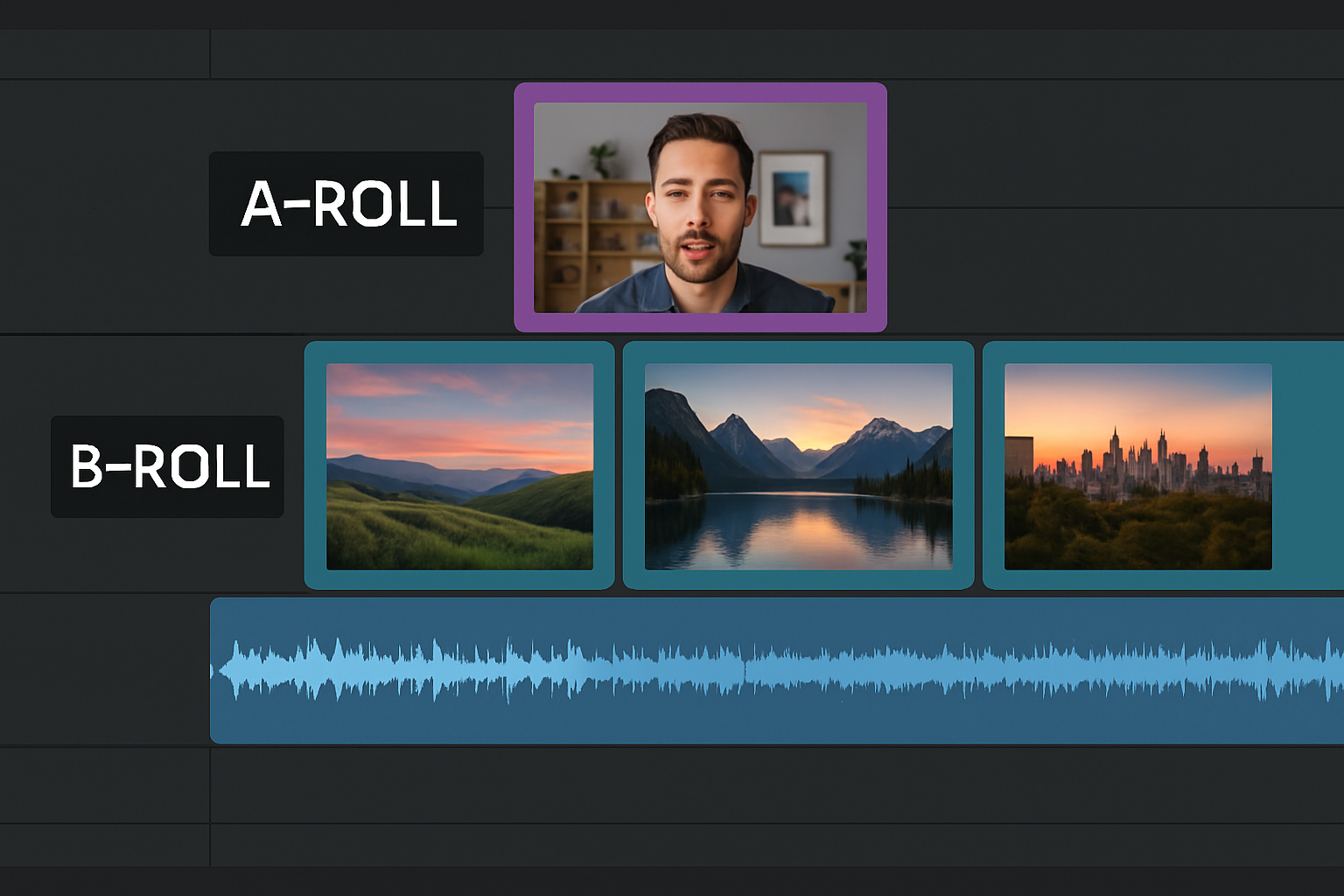
What Is B-Roll? The Complete Guide for Modern Video Creators
Learn what B-roll is, why it matters, and how to use it effectively to elevate your video content across LinkedIn, social channels, and professional productions.
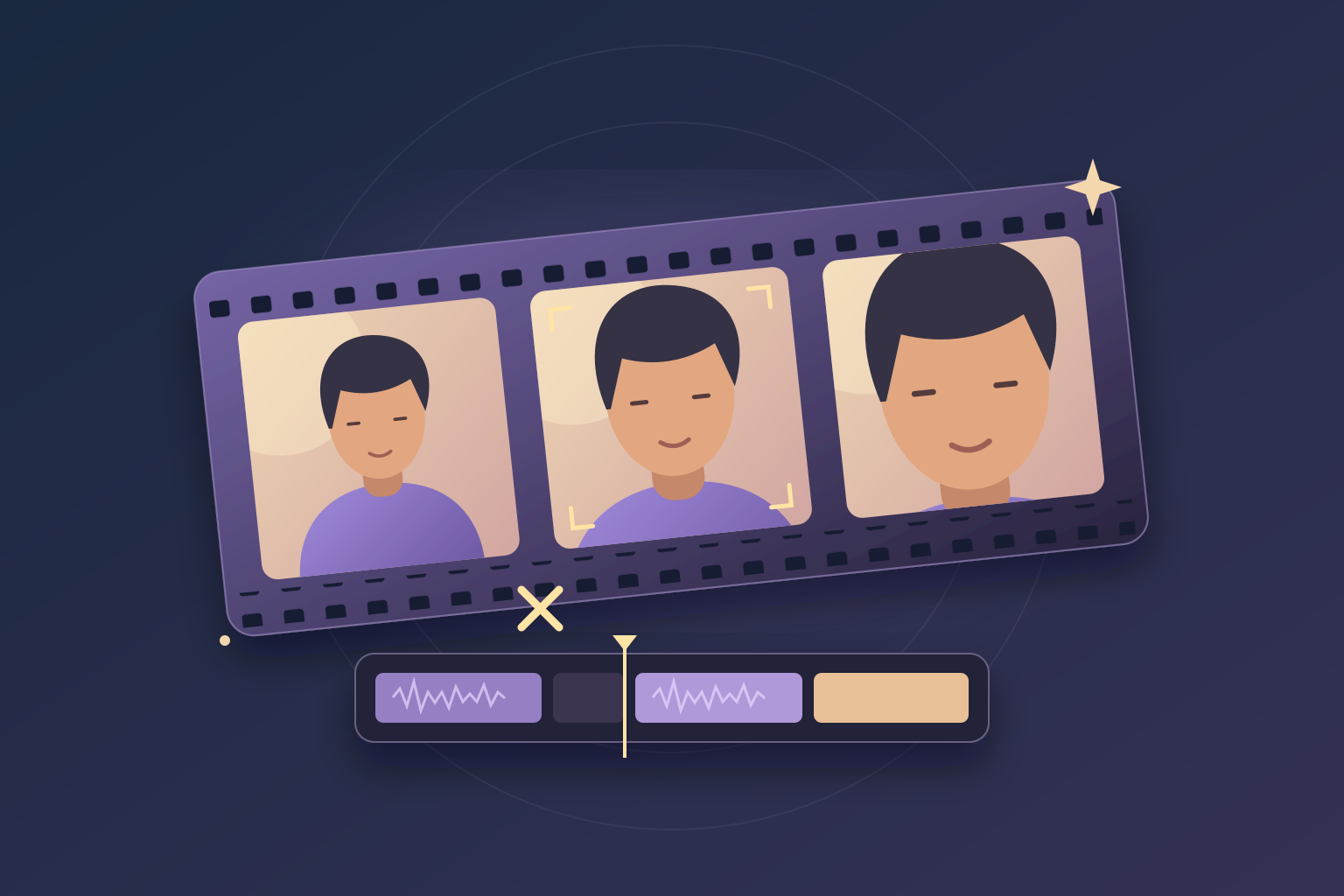
How to Use Jump Cuts to Hold Attention Without Creating Visual Noise
Learn when jump cuts improve pacing, where to place them, when to use punch-ins or B-roll, and why information change matters more than cutting on a fixed timer.